
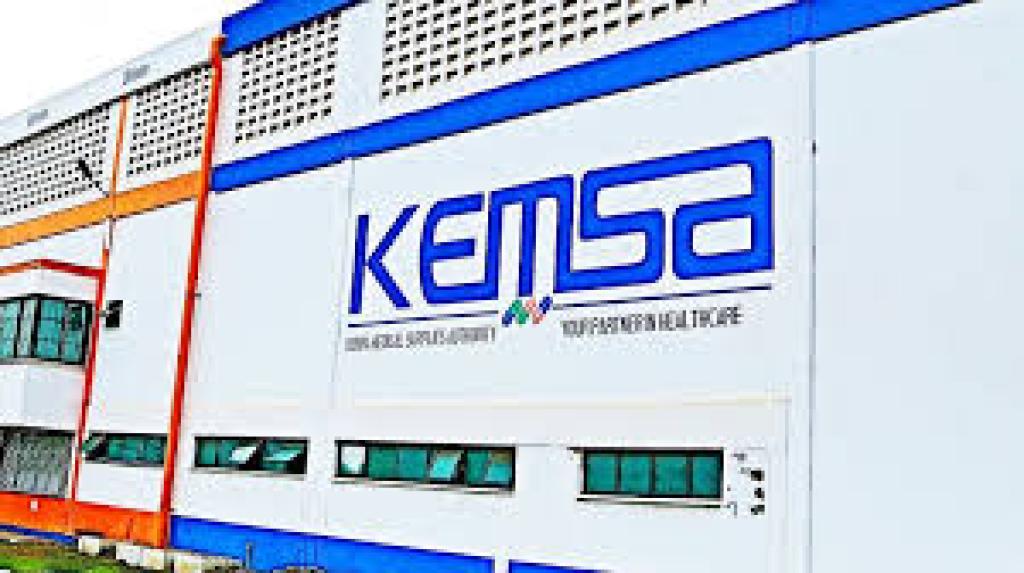
Civil society organizations say medicines and health commodities worth Sh376.8 million expired under KEMSA custody, raising questions over forecasting, distribution and accountability in Kenya’s public medical supply chain.
By Shahidi Digital Editorial
Civil society organisations are demanding answers after audit findings raised concerns over medicines and health commodities valued at Sh376.8 million, which they say expired while under the custody of the Kenya Medical Supplies Authority.
The organizations, which represent patients with cancer, HIV, non-communicable diseases and other chronic conditions, say the findings point to possible weaknesses in forecasting, distribution and stock management within Kenya’s public medical supply chain.
They argue that the issue is especially concerning at a time when patients in public health facilities continue to report shortages of essential medicines, forcing some to delay treatment or pay out of pocket in private pharmacies.
In a separate audit finding under the National Government report, the Auditor-General also flagged expiry of drugs procured by KEMSA under a Global Fund-supported project. The report states that “drugs procured by the Kenya Medical Supplies Authority under the Project’s Grant were found to have expired in the Authority’s stores due to delayed distribution and low uptake/demand for the drugs.”
The Auditor-General further concluded that, “in the circumstances, the effectiveness of internal controls over inventory management could not be confirmed.”
According to the civil society coalition, the expired stock included Ministry of Health commodities valued at Sh23.96 million, among them cancer treatment medicines worth Sh9.26 million.
The groups described the finding as troubling, especially for patients managing conditions that require uninterrupted treatment.
“The findings paint a troubling picture of medicine wastage, supply chain inefficiencies, weak inventory controls, and patient access challenges,” the coalition said in a statement.
The statement was issued by the Kenyan Network of Cancer Organizations, the Health NGOs Network, NCD Alliance Kenya and the Kenya Mended Hearts Patients Association.
The organizations said the issue goes beyond the value of the expired stock. They argued that every medicine that expires in storage represents a failure somewhere in the chain of planning, procurement, warehousing, distribution or facility-level ordering.
“Medicines are procured to save lives, not to expire in warehouses,” the coalition said. “Every expired medicine represents a missed opportunity to prevent suffering, prolong life, and improve health outcomes.”
The groups also cited audit findings indicating that commodities worth Sh558.6 million were received by KEMSA with less than 75 per cent of the required shelf life remaining. Another Sh283.9 million worth of commodities were reportedly issued to health facilities with less than six months before expiry.
They said these findings raise questions over whether facilities had enough time, patient demand and operational capacity to dispense the commodities before they became unusable.
“These findings raise important questions regarding procurement planning, forecasting, inventory management, stock redistribution, and the ability of facilities to dispense medicines before they expire,” the coalition said.
The civil society groups also raised concern over whether KEMSA had an effective operational mechanism for tracking near-expiry stock, redistributing commodities to facilities with demand, recalling unusable products, returning eligible stock to suppliers or safely disposing of expired medicines.
They warned that weak tracking and disposal systems could undermine public confidence in the safety and reliability of medicines supplied through the public health system.
“Patients and the public deserve assurance that expired, damaged, recalled, and unusable medicines are effectively removed from circulation and cannot inadvertently reach health facilities or patients,” the coalition said.
For patients with cancer, HIV, heart disease and other chronic conditions, the groups said medicine wastage is not only an accounting issue. It can mean missed treatment cycles, interrupted therapy, delayed care or additional out-of-pocket costs for families already under financial strain.
KEMSA, in its response to the audit issues, is reported to have attributed part of the expiry of Ministry of Health commodities, including cancer medicines, to lack of distribution instructions from the ministry and low demand for some products.
The agency has also maintained that forecasting and supply planning for such commodities are coordinated by the Ministry of Health, while KEMSA’s role is largely procurement, warehousing and distribution.
KEMSA further operates a pull-based distribution model, where health facilities requisition medicines based on their needs and consumption patterns.
But the civil society organizations said this explanation leaves major accountability questions unanswered.
“If facilities requisition medicines based on demonstrated need, why did lifesaving medicines expire while patients continued to report stock-outs, treatment interruptions, delayed care, and unaffordable out-of-pocket purchases?” the groups asked.
They also want the Ministry of Health to explain what measures were in place to identify overstocked commodities and redistribute them before expiry.
“If cancer cases continue to rise across the country, how was low demand established, and what evidence exists to demonstrate that facilities with unmet need were unable to access these commodities?” the statement added.
The coalition said its concerns are not aimed at assigning blame to one institution, but at identifying where the system failed.
“These questions are not about assigning blame. They are about ensuring accountability throughout the supply chain and identifying where system failures occurred so that they are not repeated,” the groups said.
The organizations also linked the medicine expiry concerns to wider financing problems in the health sector, including county debts to KEMSA, delayed reimbursements to health facilities and liquidity challenges under the Social Health Authority.
They warned that financial bottlenecks could worsen the cycle of stock-outs, unsupplied orders and eventual wastage.
“The result is a vicious cycle: medicines remain in warehouses, facilities struggle to replenish stocks, patients face treatment interruptions, and public resources are ultimately lost through expiry and wastage,” the coalition said.
The groups are now calling for corrective action within 90 days.
They want the Ministry of Health to convene an urgent national multi-stakeholder meeting to explain the forecasting, quantification, supply planning and distribution decisions that informed procurement of the affected commodities.
They are also asking KEMSA to publicly disclose a comprehensive audit of medicines currently at risk of expiry in its warehouses and distribution centres, reconcile expired, damaged, recalled and near-expiry commodities, and establish an emergency redistribution mechanism for usable near-expiry stock.
The Social Health Authority has also been urged to address reimbursement delays that reduce facility liquidity and limit the ability of hospitals to procure medicines.
The audit findings are expected to renew scrutiny of Kenya’s medical supply chain, particularly the coordination between the Ministry of Health, KEMSA, counties and public health facilities.
For the civil society organizations, the issue should not end as another audit query.
“We urge all stakeholders to act with urgency, transparency, and accountability to ensure that the findings highlighted in the Auditor-General’s report become a catalyst for reform rather than another missed opportunity,” the coalition said.


Comments (0)