
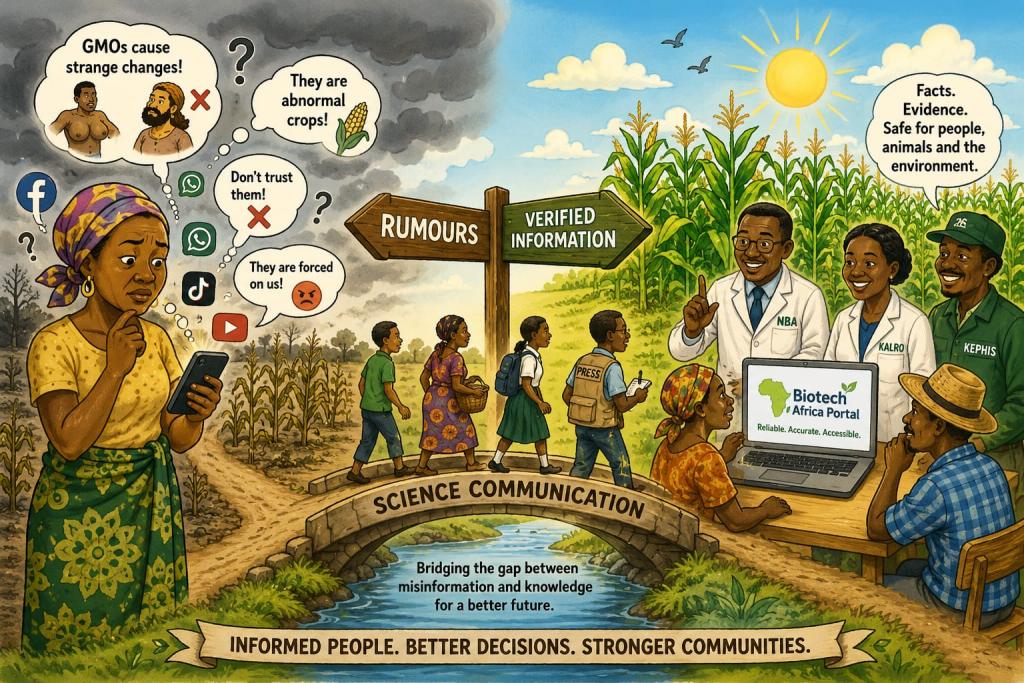
In many countries, conversations about GMOs reached the public through political debates, court battles, regulatory disputes, and social media campaigns before ordinary citizens had an opportunity to understand the science behind the technology. As a result, public perception was often shaped by politicians and online influencers rather than researchers and biosafety experts.
When I asked Jerusa Naliaka, a 33-year-old resident of Makhonge village in Chwele, Bungoma County, whether she had ever heard of genetically modified organisms (GMOs), her response came quickly.
"Yes," she replied with a grin.
"What are they?" I asked.
"They're abnormal food crops which the government, in collaboration with wazungu, have been trying to force on us," she said confidently.
"Why do you call them abnormal?"
"Because I'm told when eaten, men develop breasts and women suddenly grow beards. Isn't that scary?" she responded.
Curious about the source of her information, I pressed on.
"Where did you get that information?"
"I'm an avid consumer of social media content. I once came across a post explaining why GMOs should be shunned by all means possible."
"Did you try to verify the claims by checking credible sources such as the National Biosafety Authority's website?"
"What is that?" she asked, visibly surprised.
That brief conversation revealed a troubling reality. For many Africans, opinions about biotechnology are being shaped not by scientists, regulators, or researchers, but by social media posts, political rhetoric, and hearsay.
It is precisely this information gap that the newly launched Biotech Africa Portal seeks to address.
Launched virtually on June 10, 2026 by ISAAA AfriCenter, the portal provides a centralized source of biotechnology and biosafety information from across Africa. It brings together approval decisions, regulatory requirements, and permit application procedures related to biotech products, making information that was previously scattered across government websites, gazette notices, and regulatory documents accessible through a single platform.
According to Dr. Margaret Karembu, Director of ISAAA AfriCenter and Chair of the Africa Science Dialogue, the portal was developed in response to long-standing challenges faced by regulators, traders, researchers, and policymakers seeking reliable information on biotechnology approvals across the continent.
"Misinformation, misrepresentation of facts, and at times outright falsehoods about biotechnology and biosafety often take root when facts and data are inaccessible," Dr. Karembu explained.
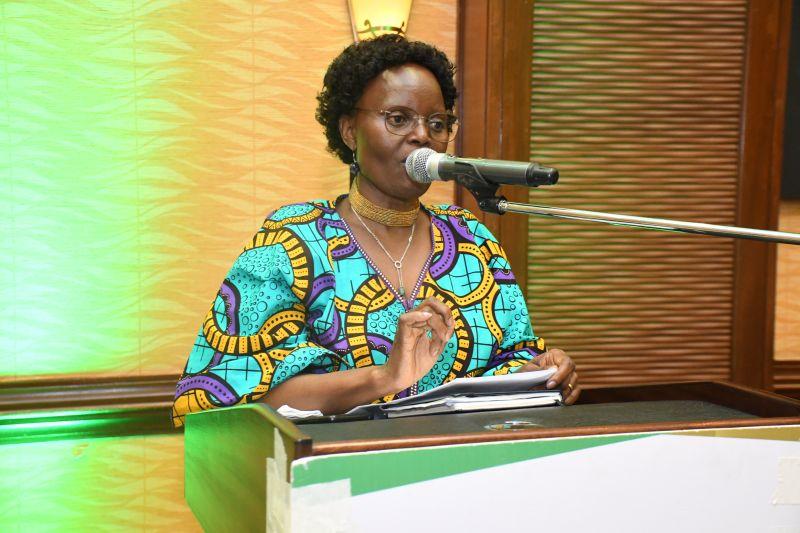
ISAAA AfriCenter Director, Dr. Margaret Karembu during a past event. Source: online
She noted that the portal serves as an open gateway where evidence replaces rumours, enabling consumers, farmers, traders, students, regulators, and policymakers to access biotechnology and biosafety information from multiple African countries through a single platform.
The initiative comes at a time when biotechnology continues to generate intense public debate across Africa, particularly around genetically modified crops.
Ironically, the challenge may not be that biotechnology entered public discourse. The challenge is how it entered public discourse.
In many countries, conversations about GMOs reached the public through political debates, court battles, regulatory disputes, and social media campaigns before ordinary citizens had an opportunity to understand the science behind the technology. As a result, public perception was often shaped by politicians and online influencers rather than researchers and biosafety experts.
Journalists, too, must accept part of the responsibility. In many instances, media outlets amplified political statements about GMOs without providing equal space for scientists and researchers to explain the facts, risks, benefits, and regulatory safeguards surrounding biotechnology.
Recognizing this challenge, the National Biosafety Authority (NBA) has intensified public sensitization efforts in Western Kenya.
During a recent outreach programme in Kakamega County, NBA Chairperson David Wamatsi emphasized the need for direct public engagement.
"We are here to educate the public on matters GMO. We want the people to understand GMO; what it is," he said. “It is good for the public to know that the government cannot present to the citizens what is harmful to them.”
Wamatsi noted that experts from institutions including the NBA, KEPHIS, and KALRO were participating in the engagements to provide factual information and answer public concerns.
NBA Chief Executive Officer Dr. Ann Karimi echoed similar sentiments. She said biotechnology offers potential solutions to challenges facing African agriculture, including food insecurity, climate change, and declining farm productivity.
"Science is fact-based," she said, explaining that the Authority's goal is to provide neutral information that allows citizens to make informed decisions about biotechnology.
She also highlighted the importance of helping Kenyans understand the role of the NBA in regulating genetically modified products and ensuring that approved technologies meet safety requirements before reaching farmers and consumers.
The launch of the Biotech Africa Portal and the NBA's sensitization campaign may appear unrelated, but both are responding to the same problem: a shortage of accessible, credible information.
As a journalist, author, and student of biosafety and biosecurity, I have witnessed how communication failures can undermine public understanding of scientific innovations. Through my studies in the Bachelor of Biosafety and Biosecurity programme at Masinde Muliro University of Science and Technology (MMUST), and through writing on biosafety communication, including my children's book Germs Goodbye published by Barnes & Noble Press in the United States, I have come to appreciate that science alone is never enough.
People cannot trust information they do not understand.
Whether one supports or opposes GMOs, every citizen deserves access to accurate, verifiable, and easily understood information before making that decision. The Biotech Africa Portal and the NBA's public outreach efforts represent important steps toward achieving that goal.
In the end, the future of biotechnology in Africa may depend less on laboratories and more on something far simpler: ensuring that facts reach the public before rumours do.


Comments (1)